


For 10 years, I’ve spoken at INBOUND.
This year, it’s different.
Because INBOUND is now UNBOUND.
And that change isn’t just branding. It reflects something bigger happening in how companies grow, how buyers make decisions, and how teams operate.
But there’s a problem.
While everything around us is changing…
The way most companies hire salespeople hasn’t.
Attending UNBOUND26?
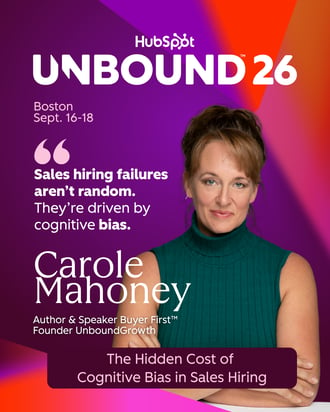 Join Carole Mahoney’s session, “The Hidden Cost of Cognitive Bias in Sales Hiring.”
You’ll learn how to:
✔ Reduce bias in sales hiring
✔ Use structured interviews to improve decisions
✔ Identify candidates who can perform under pressure
If you’re hiring salespeople in today’s market, this session belongs on your schedule.

The Shift to UNBOUND Signals a Bigger Change
According to HubSpot, the move from INBOUND to UNBOUND reflects a shift toward a more expansive, integrated approach to growth—one that goes beyond traditional inbound marketing.
Growth is no longer linear.
Buyer journeys aren’t predictable.
Decisions are happening across more channels, with more uncertainty, and more complexity.
That’s the environment your sales team is operating in.
But Sales Hiring Is Still Stuck in the Past
Despite all of that, most sales hiring decisions still look like this:
– A resume review
– A conversational interview
– A “gut feeling” decision
It feels logical.
It feels thorough.
It feels like you’re making a smart choice.
But you’re not evaluating what actually predicts performance.
You’re evaluating what feels familiar.
The Hidden Driver: Cognitive Bias
Cognitive bias shows up in sales hiring more than most leaders realize.
You trust candidates who:
– Sound confident
– Communicate clearly
– Remind you of past top performers
But those traits don’t necessarily translate to success in your specific sales environment.
In fact, they often mask the behaviors that matter most:
– How someone handles pressure
– How they respond to pushback
– How they make decisions in uncertain situations
And those are the exact conditions your buyers are navigating today.
Why This Is Getting More Expensive
The cost of a bad sales hire has always been high.
But in today’s environment, it’s even higher.
Because now you’re dealing with:
– Longer sales cycles
– More complex buying committees
– Greater uncertainty in decision-making
When hiring decisions are based on bias instead of structure, the impact shows up quickly:
Missed revenue.
Slower ramp time.
Inconsistent performance across the team.
And perhaps most frustrating…
Repeating the same hiring mistakes over and over again.
wATCH THIS VIDEO FOR MORE INSIGHTS:
What High-Performing Teams Do Differently
The teams that consistently hire strong salespeople don’t rely on instinct.
They rely on structure.
That means:
– Clearly defining what success looks like in the role
– Using structured interviews to evaluate specific behaviors
– Testing how candidates respond to real-world sales scenarios
Because the goal isn’t to find someone who interviews well. It’s to find someone who can perform when it matters.
UNBOUND Growth Requires UNBOUND Thinking
The shift to UNBOUND reflects a broader truth:
You can’t operate with old assumptions in a new environment.
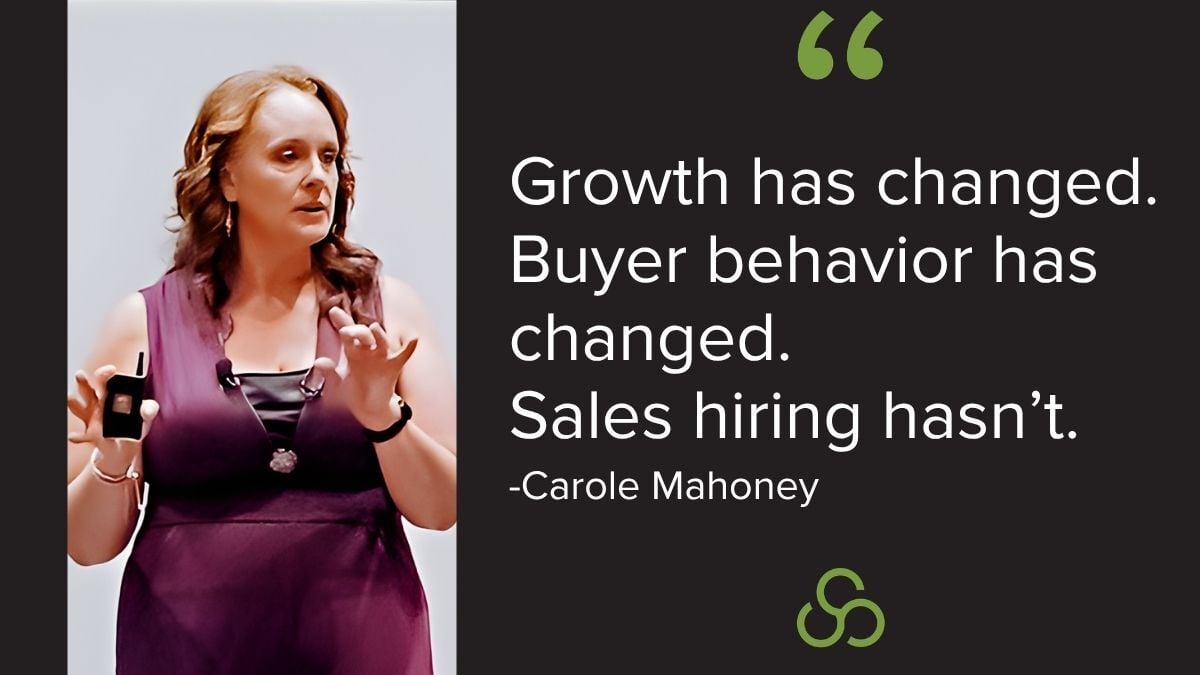
If growth is changing…
If buyer behavior is changing…
Then your hiring process has to change too.
Because the decisions you make before someone joins your team will determine whether they succeed—or struggle—once they’re in it.
What This Means for Your Next Hire
Before your next sales hire, ask yourself:
Are you evaluating performance…
Or are you evaluating comfort?
Are you testing real selling behavior…
Or relying on how someone shows up in a conversation?
Are your decisions structured…
Or influenced by bias?
Because in a world that’s becoming more complex and less predictable…
The cost of getting this wrong is only increasing.
Going Deeper at UNBOUND26
I’ll be breaking this down in more detail at UNBOUND26, including:
– Where cognitive bias shows up in your hiring process
– How to design a structured interview that reduces it
– What to look for instead of confidence and familiarity
If you’re responsible for building or leading a sales team, this is a conversation worth having.
Most hiring decisions don’t fail because of a lack of effort.
They fail because of how the decision is made.