


I remember the moment our hiring process took over my life.
My desk was covered in resumes. Interviews filled my calendar. Assessments waited to be scored. What should have been a simple step in growing the business felt exhausting.
If you’re a small business owner trying to grow revenue while hiring a salesperson, you know this struggle.
Sales hiring can quickly become overwhelming. And underneath all that effort is one hard question:
How do you know who can actually sell?
 Are you rethinking how you hire and onboard sales talent?
Learn how our Done-With-You (DWY) Sales Hiring Program helps you build a disciplined sales hiring process that works.

Without a clear process, every resume starts to look the same. Interviews drag on. Decisions stall. And revenue growth slows down.
If you want to avoid expensive hiring mistakes and build a predictable sales team, you don’t have to figure this out alone.
The Hidden Problem in Most Sales Hiring Processes
Many companies assume that more steps mean better hiring.
More interviews.
More tests.
More opinions.
But a longer hiring process does not guarantee better results.
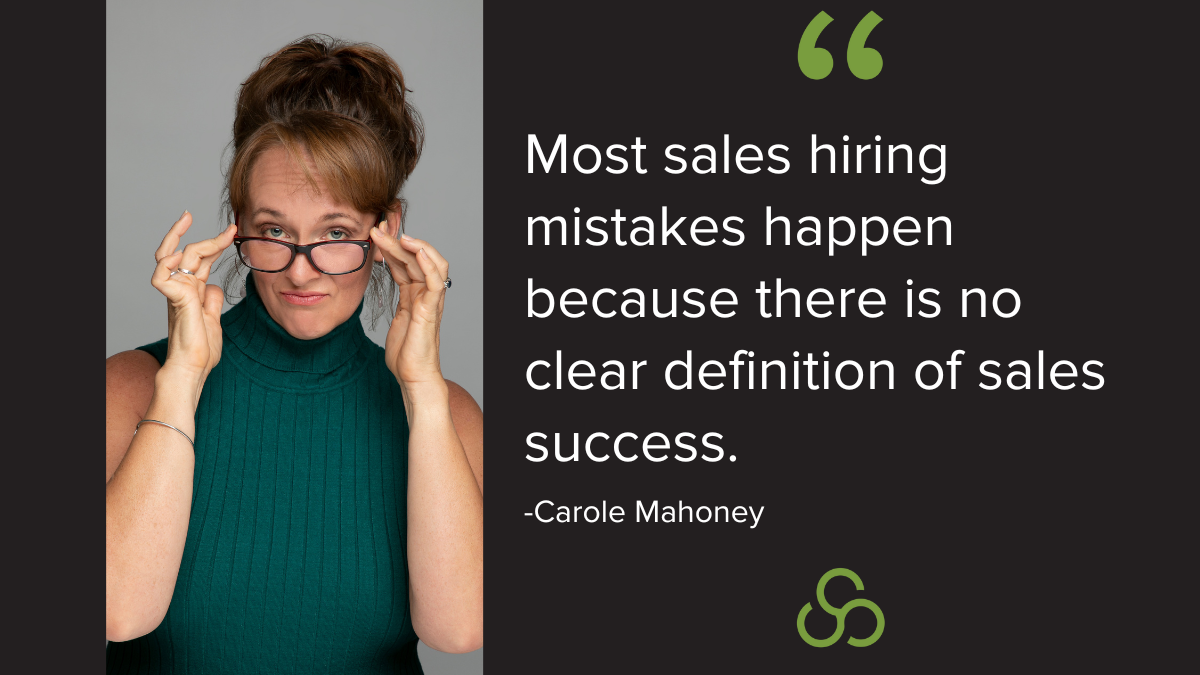
Most sales hiring mistakes happen because there is no clear definition of sales success. When you don’t define what strong performance looks like, you end up measuring candidates against opinions instead of standards.
That’s when hiring turns into a marathon.
When Interviews Become Too Complicated
At one point, we built an interview process that felt like an exam.
-
Multiple tests.
-
Role plays.
-
Personality quizzes.
It sounded thorough.
But it drained time and energy. And it didn’t tell me what I actually needed to know.
I needed clear sales criteria:
-
What does a strong demo look like?
-
How does this person handle objections?
-
Can they show proof of hitting quota?
-
Do they know how to manage a real sales cycle?
Once we defined those markers, interviews became clearer and shorter.
Too Many Interview Rounds Slow Revenue Growth
Then came the approval maze.
Managers wanted input. Partners wanted input. Each extra interview added another week.
Without a standardized scorecard, everyone judged candidates differently. One person focused on personality. Another focused on experience. Someone else looked for “culture fit.”
The result?
-
Delays
-
Confusion
-
Lost candidates
A simple evaluation sheet aligned the team. Decisions became faster and more consistent.
Watch this video for more insights:
Weak Recruitment Tools Create Chaos
For a while, I relied on spreadsheets and email threads.
It didn’t work.
Notes were scattered. Interview feedback got buried. We lost track of candidates.
If you want a better sales recruitment process, you need one system to:
-
Track applicants
-
Schedule interviews
-
Store evaluations
-
Compare candidates
It doesn’t have to be complex. It just needs to be organized.
Vague Job Descriptions Attract the Wrong Candidates
One of my biggest lessons? Clarity matters before the first resume arrives.
When I posted a broad sales job description, we received hundreds of applications. Most were not qualified.
When you clearly define:
-
Sales metrics (quota, deal size, sales cycle)
-
Industry experience
-
Communication style
-
Proven results
You attract better candidates—and fewer distractions.
Resume Reviews Should Not Be Guesswork
Reading resumes without a rubric wastes time.
“Sales experience” can mean anything.
A structured resume scorecard should look for:
-
Measurable performance (quota percentage, revenue growth)
-
Relevant market experience
-
Evidence of follow-through
-
Real examples of sales wins
When every resume is measured against the same criteria, decisions become easier.
Here’s What We Changed:
We stopped adding steps and started adding discipline.
We defined what sales success looked like before we opened another resume.
We reduced interview rounds.
We created a simple scorecard.
We invested in a basic applicant tracking system.
And everything shifted.
We moved from application to offer in weeks instead of months.
More importantly, we started hiring salespeople who could actually drive revenue.
Sales hiring discipline protects your growth.
A failed sales hire doesn’t just cost salary. It costs pipeline, morale, and momentum.
If this post helped clarify your sales hiring process, share it with another founder or sales leader who’s stuck in the hiring cycle. And drop a comment below—what has been your biggest hiring challenge?
If you want to understand the real financial impact of a bad sales hire, calculate the full cost here:
 Watch the On-Demand Session --because the way you hire shapes the revenue you build.
PLUS you will also take away:
- An interview scorecard to use data effectively in hiring decisions- A free sample assessment of your next hire
- Framework to craft your sales onboarding program